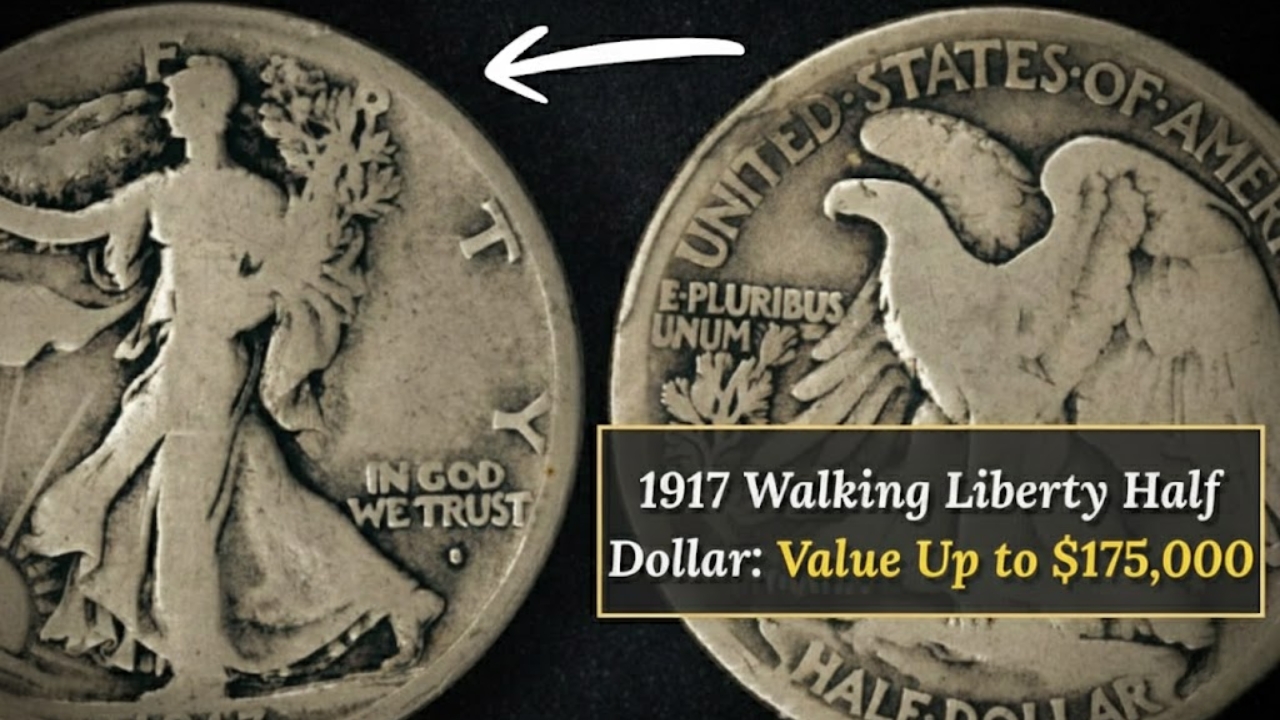
The 1917 Walking Liberty Half Dollar is one of the most iconic coins in American numismatic history. Designed by Adolph A. Weinman, this coin is celebrated for its artistic beauty and historical significance. Collectors and investors alike prize it not only for its silver content but also for its rarity and the unique variations that make certain examples worth thousands of dollars. With values ranging from modest sums to an astonishing $175,000 for the rarest specimens, the 1917 Walking Liberty Half Dollar stands as a cornerstone of coin collecting.
Historical Background of the Walking Liberty Design
The Walking Liberty design was introduced in 1916 as part of a broader effort to beautify American coinage. Weinman’s depiction of Lady Liberty striding confidently toward the dawn of a new day symbolized progress, freedom, and strength. The reverse featured a majestic eagle perched on a mountain crag, wings partially unfolded, representing vigilance and independence. This design was so admired that it later inspired the American Silver Eagle bullion coin, which remains in production today.
Minting and Variations in 1917
The year 1917 was particularly important for the Walking Liberty Half Dollar because it marked the production of coins with two distinct mintmark placements. Early in the year, mintmarks were placed on the obverse, just below the motto “In God We Trust.” Later, the mintmark was moved to the reverse, beneath the eagle. This change created two major varieties for collectors: the 1917 Obverse Mintmark and the 1917 Reverse Mintmark. Both varieties were struck at the Denver (D) and San Francisco (S) mints, in addition to the Philadelphia Mint, which produced coins without a mintmark.
Why the 1917 Walking Liberty Half Dollar Is Valuable
The value of the 1917 Walking Liberty Half Dollar depends on several factors, including rarity, condition, and mintmark placement. Coins with obverse mintmarks are generally scarcer and command higher premiums. Additionally, coins in exceptional condition, particularly those graded Mint State (MS) by professional grading services, can reach extraordinary values. For collectors, the combination of historical significance, artistic design, and rarity makes this coin a prized possession.
Value Chart for the 1917 Walking Liberty Half Dollar
The following ranges illustrate the approximate values for the 1917 Walking Liberty Half Dollar across different conditions and varieties:
- 1917 Philadelphia (No Mintmark): $20 to $1,500 depending on grade
- 1917-D Obverse Mintmark: $50 to $20,000 depending on grade
- 1917-D Reverse Mintmark: $40 to $15,000 depending on grade
- 1917-S Obverse Mintmark: $60 to $175,000 depending on grade
- 1917-S Reverse Mintmark: $50 to $10,000 depending on grade
These values highlight the dramatic difference between common circulated examples and rare Mint State coins. The 1917-S Obverse Mintmark in top condition is the standout rarity, with auction records reaching six figures.
Factors That Influence Value
Several elements determine the worth of a 1917 Walking Liberty Half Dollar:
- Condition: Coins are graded on a scale from Poor (P-1) to Mint State (MS-70). Higher grades yield higher values.
- Mintmark Placement: Obverse mintmark coins are scarcer and more desirable.
- Rarity: Certain varieties, like the 1917-S Obverse Mintmark, are exceptionally rare in high grades.
- Market Demand: Collector interest and auction activity can drive prices upward.
- Historical Appeal: Coins with unique stories or provenance may attract premium bids.
Collecting the 1917 Walking Liberty Half Dollar
For collectors, assembling a complete set of 1917 Walking Liberty Half Dollars is both challenging and rewarding. The pursuit often involves finding coins from each mint and mintmark placement. While circulated examples are relatively affordable, uncirculated coins require significant investment. Many collectors focus on acquiring one or two key varieties, particularly the obverse mintmark issues, to enhance their collections.
Investment Potential of Rare Coins
Rare coins like the 1917 Walking Liberty Half Dollar are not only collectibles but also potential investments. Over time, values for high-grade examples have shown steady appreciation. Investors view these coins as tangible assets that combine historical significance with scarcity. However, like all investments, coin collecting carries risks, and values can fluctuate based on market trends. Still, the enduring appeal of the Walking Liberty design ensures long-term interest.
Tips for Identifying Authentic Coins
When evaluating a 1917 Walking Liberty Half Dollar, authenticity is paramount. Collectors should look for the following:
- Clear details in Liberty’s gown and the eagle’s feathers
- Proper mintmark placement for the year and variety
- Signs of wear consistent with the coin’s grade
- Certification from reputable grading services such as PCGS or NGC
Counterfeits exist, so purchasing from trusted dealers and auction houses is essential.
Preservation and Care of Rare Coins
Maintaining the condition of a 1917 Walking Liberty Half Dollar is crucial for preserving its value. Coins should be stored in protective holders that prevent exposure to air, moisture, and contaminants. Handling should be minimized, and when necessary, gloves should be used to avoid fingerprints. Proper storage in climate-controlled environments helps ensure that coins retain their luster and appeal for generations.
Auction Records and Notable Sales
The 1917-S Obverse Mintmark in Mint State condition has achieved remarkable auction results, with prices soaring to $175,000. These records underscore the rarity and desirability of this particular variety. Collectors and investors closely watch auction outcomes, as they often set benchmarks for future valuations.
The Legacy of the Walking Liberty Design
The Walking Liberty Half Dollar remains one of the most beloved designs in American coinage. Its influence extends beyond numismatics, as the design was revived for the American Silver Eagle in 1986. This continuity reflects the timeless appeal of Weinman’s artistry and the enduring symbolism of Liberty. For collectors, owning a 1917 Walking Liberty Half Dollar is not just about value—it is about holding a piece of American history.
Conclusion
The 1917 Walking Liberty Half Dollar is a coin that embodies beauty, history, and rarity. With values ranging from modest sums to an extraordinary $175,000, it captures the imagination of collectors and investors alike. Whether pursued for its artistic design, historical significance, or investment potential, this coin remains a shining example of numismatic excellence. For those fortunate enough to own one, it represents not only a tangible asset but also a lasting connection to America’s rich heritage.